Taken, not earned
For hundreds of years, empires ruled other lands and took their wealth. This is called colonialism. The wealth flowed to Europe.
Make a poster
The case in six chapters
We have a plan to tax it, and to use it to repair the harm of slavery and empire.
Every second, about $182.9 million is traded in the financial markets.
Chapter 01
Empires grew rich on wealth they took from the lands they ruled.
Illustration: a printed globe turns and unrolls into a flat map of the world. Gold arrows run from ten colonies to Europe: India, the Gold Coast, Jamaica, Kenya, Congo, Brazil, Angola, Senegal, Algeria and Java. They end in London, Paris, Lisbon, Brussels and Amsterdam. Then the sum appears, $45 trillion, and coins flow along the arrow from India to London. The map fades back. In London the coins settle as a pile of gold stacks; each stack is one million million dollars. Last, Britain’s whole economy for one year, $4 trillion, lands beside the pile as a few ink stacks. A red stamp reads 11 years.

For hundreds of years, empires ruled other lands and took their wealth. This is called colonialism. The wealth flowed to Europe.
Make a poster
Economist Utsa Patnaik worked out that British rule took $45 trillion from India.
She added up the export earnings that Britain kept from India. She then grew that sum at five per cent a year to today. Some historians question this method. Read a critique
It all ended up in London: $45 trillion. Dr Utsa Patnaik says: “Indians were never credited with their own gold and forex earnings.” Forex means money in foreign currencies.
Make a posterThat is about 11 years of everything Britain’s economy makes today.
Make a posterChapter 02
The stolen wealth did not disappear. It was stored, invested and traded. It still is.
Illustration: a single gold bar in a pool of light. The view pulls back to show endless rows of gold stacked under the arched rooms of a bank. Last, a few gold coin stacks slide out of the vault to the right, on their way to the financial markets. They are only a picture: the stacks are not counted.

All wealth under capitalism is stained with the blood of enslavement and colonialism.
Make a poster
The Bank of England keeps gold in rooms the size of three tennis courts.
Make a poster
The people who control finance control the world’s wealth. Finance is the engine of empire.
Make a poster
Gold in a vault is only part of it. Most of the stolen wealth now moves through the financial markets, every day.
Make a posterChapter 03
Every day, the wealthy trade huge sums through four financial markets.
Picture chart: each coin stack is one million million dollars. Four rows of gold stacks show what is traded each day: fixed income $7.4 trillion, currencies $7 trillion, stocks $1.4 trillion and commodities $0.2 trillion. A thin ink sliver shows what all the world’s workers earn in a day: $141 billion.
| Market | Per day |
|---|---|
| Fixed income: bonds, interest rates, credit default swaps | $7.4 trillion |
| Wholesale currency trading | $7 trillion |
| Stocks: banks, fossil fuels, weapons, index derivatives | $1.4 trillion |
| Commodities: oil, gas, crops, carbon, gold, lithium | $0.2 trillion |
| All four markets | $15.8 trillion |
Most taxes on trading only cover company shares. They miss 99% of all trading.
Make a posterWhen the markets are open, every 13 minutes they trade as much as all the world’s workers earn in a whole day. This is the wealth they take from us, every single day.
Make a posterChapter 04
A small tax on these trades could pay for repair.
Picture chart: a thin slice is cut off the top of every stack of trades and turns green. A year of slices makes $40 trillion, drawn as green stacks beside a faint outline of the $45 trillion Britain took from India.
We call it the Ubuntu Tax. Ubuntu is an African word. It means: I am because we are. The tax is small, and it falls on every trade in these markets.
Make a posterThat is $40 trillion per year. In one year, the tax would raise almost as much as Utsa Patnaik says Britain took from India. Enough for free food, housing, health care and education for everyone.
Make a posterChapter 05
Together we can win this. Five steps take us from repair to freedom.
Picture chart: each figure stands for the movement, and each green coin stack is one million million dollars. First a few figures join hands: the radical groups. Then allies, progressives and liberals join them, each a big group in a red ring. Next the names of a group of seven rich countries are stamped LAW in red, one by one. With the stamps, the tax’s $40 trillion per year drops in as one pile of green stacks. Then the pile is shared out in green stacks to food, housing, health care and education. The even split is only an example. At the end the stacks stay where they were shared out, and a crowd of people, their joined hands raised, fills the picture around them.
Grow from a small core into a mass movement. Bring in allies, progressives and liberals.
Make a posterBuild the pressure to make the Ubuntu Tax law. Start with at least the G7, a group of seven rich countries.
Make a posterUse the tax to end poverty and hunger. Free food, housing, health care and education for everyone.
Make a posterReplace capitalism and empire with fair, equal and sustainable economies. Nothing less than system change.
Make a posterChapter 06
Reparations means repair for the harm done. To win it, we need a movement of movements.
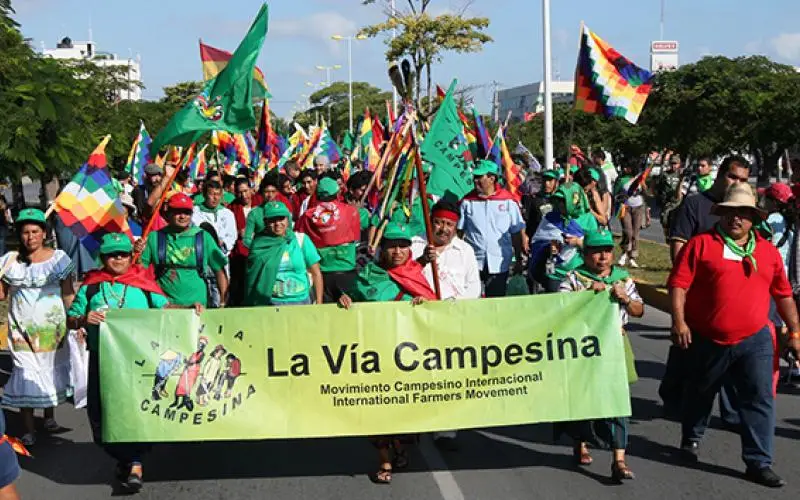
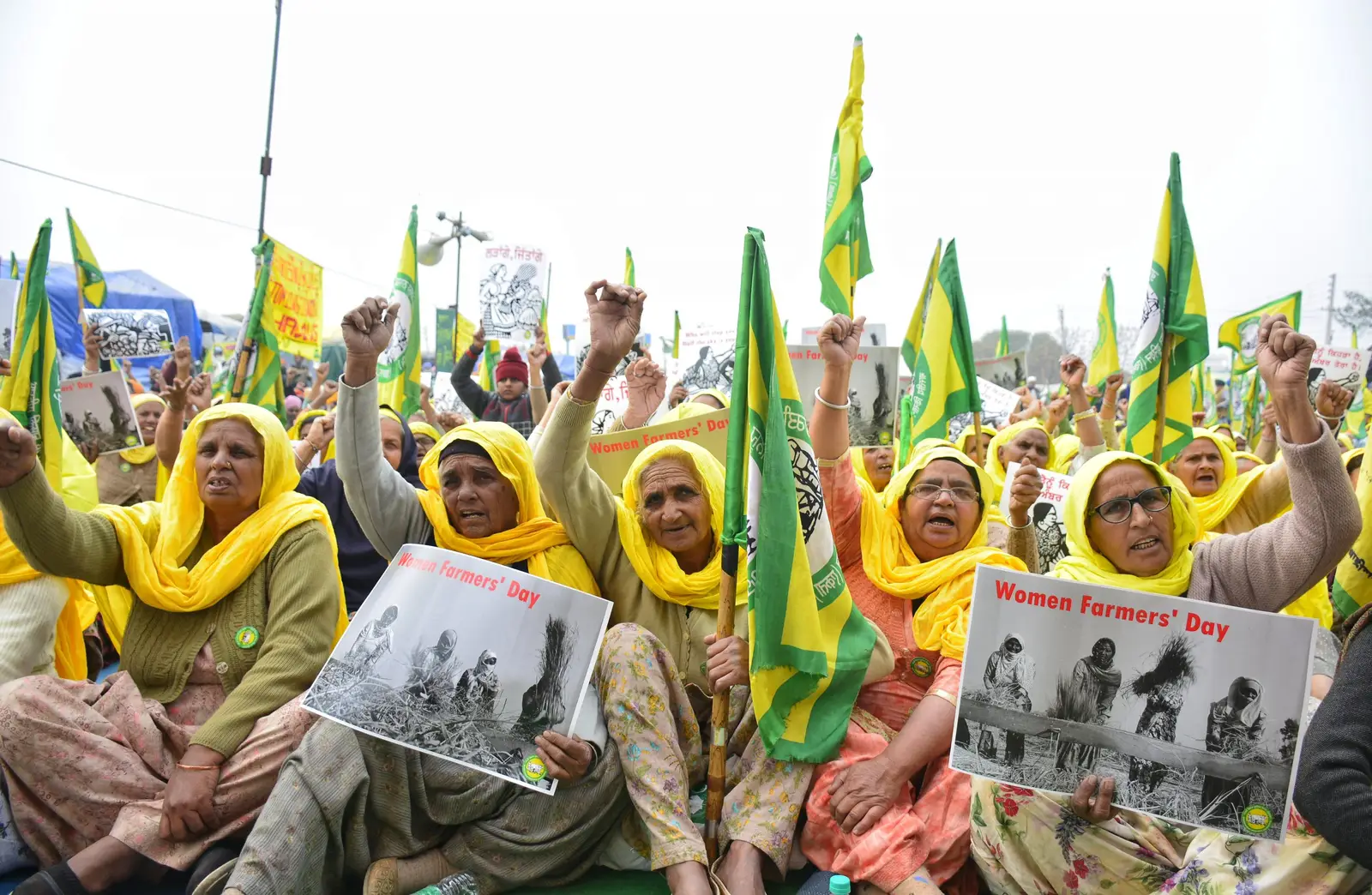
Photographs: a La Via Campesina march, and women farmers protesting in Punjab with fists raised. Under them a long row of people fades in, all holding hands. Last, one red figure joins the end of the row, marked “You”. The figures stand for the movement, not for any number of people.
Reparations needs a global movement of many groups, fighting at every level. It must be led by ordinary people.
Make a posterPlaceholder
This form is not connected yet. Nothing you type here is sent. For now, email us at info(at)