
Asia · 2010–2022
Who built Qatar's World Cup?
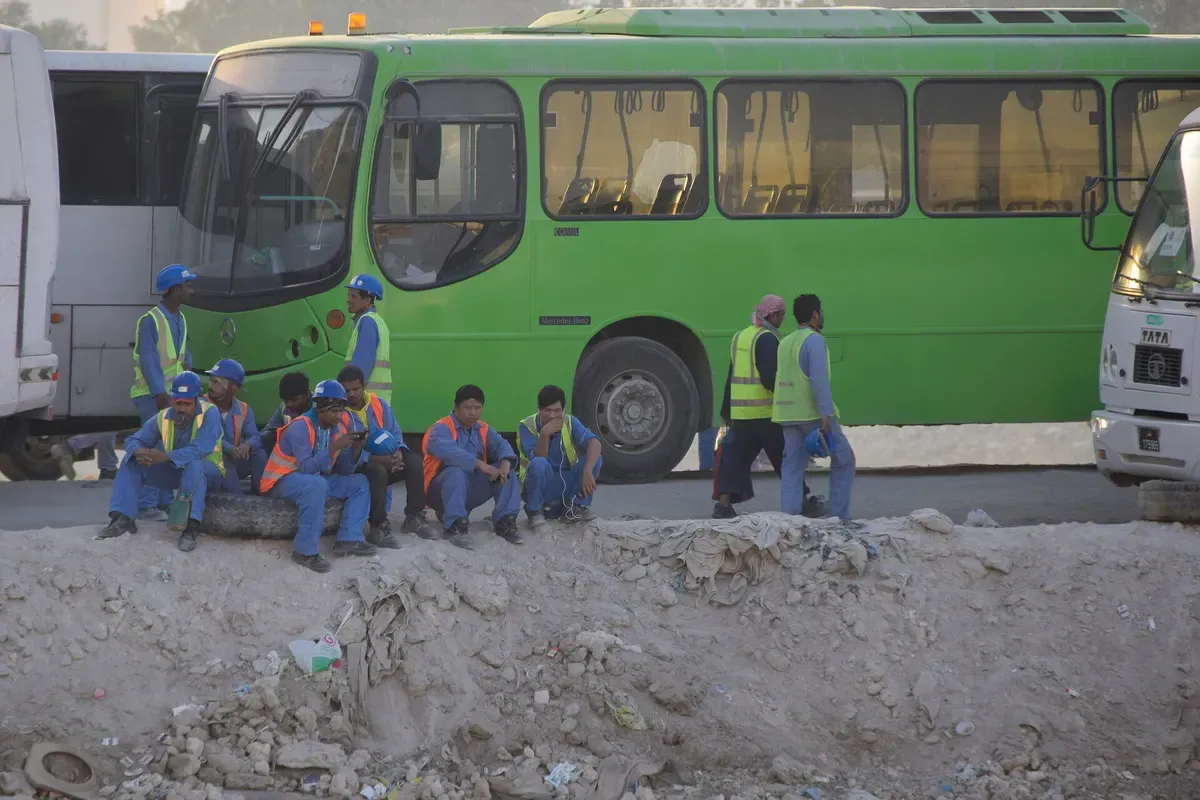

Qatar won the right to host the 2022 World Cup in 2010. The stadiums and hotels it needed were built by migrant workers, many of them from South Asia.
Many had paid recruiters at home for the job and arrived owing money they had to work off. Under Qatar's sponsorship system, kafala, a worker needed the employer's permission to change jobs or to leave the country, so a worker who was underpaid or cheated had little way out. Qatar changed parts of the system in 2020.
In 2024 a report that FIFA itself commissioned found that FIFA has a responsibility to compensate the workers who were harmed. Amnesty International, Human Rights Watch, FairSquare and Equidem have called for a fund equal to the tournament's prize money. FIFA has not set one up.
- How it worked
- Make people work for nothing
- Who gained
- FIFA, which ran the tournament; the Qatari state, its host; the contractors and recruitment agents who supplied the workers.
- What it left
- Workers who went home still owing what they had borrowed to get there, and a fund for them that FIFA's own review said it should pay for.
- Sources