
Reparative JusticePart 2 of 11 · The idea
Truth, healing and repair
Healing from enslavement and colonialism needs money. A small tax on the financial markets can pay for it.
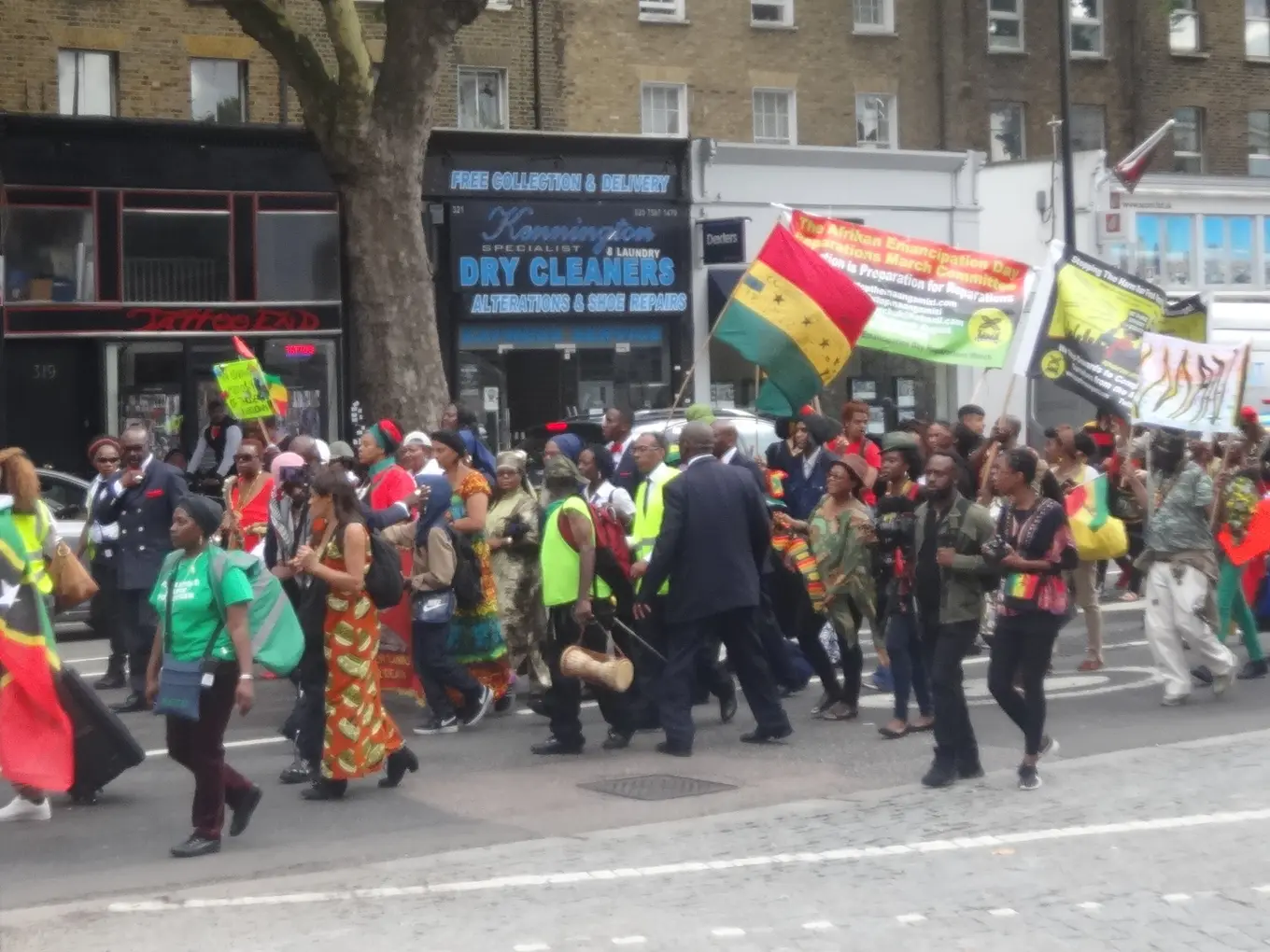

Reparative justice for truth, healing and repair
Speaking the truth, healing and repairing ourselves from the trauma of enslavement and colonialism necessitates financial resources, which is yet another result of being forced to live under capitalism, where the majority can never be free from exploitation. We want to take ill-gotten financial resources from the abundance in high finance and elite global wealth to hand to all communities to heal and repair from the legacies of slavery and colonialism.
We will use these resources to end politically-made destitution, poverty and hunger with free food, housing, healthcare and education. The trillions of dollars in ill-gotten and idle wealth in the financial markets, which offer a real-time valuation of the rising profits from stolen lands, resources, and labour exploitation, are the ultimate measure of the "spoils of slavery and colonialism." Financial markets as we know them now first developed in the 16th century to assist Western European elites build their empires, enslaving Africans and colonising the global south.
The financial markets are the most appropriate target for reparative justice because they not only provide systemic economic reparations, but also lead to the source of imperial wealth, power, and privilege that underpins capitalism today. Financial markets transact $15 trillion per day, which is an indicator of the "present day value" of elite wealth, power, and privilege derived from enslavement and colonialism. It represents the real time value of what they are stealing from all of us, every day.
Financial markets are the world's largest and wealthiest markets, and they include stock exchanges where shares of the world's largest corporations are traded, as well as debt, currency, interest rate, and commodities markets where oil and gas, crops, gold, and other valuables are traded between governments, wealthy individuals, banks, and other financial firms.
The Ubuntu tax is a small incremental tax applied to all transactions across all exchanges and markets, building on existing financial transaction taxes operating in liberal markets around the world. A 1% tax raises $150 billion per day in the first year, which is equivalent to $2,000 per day for everyone on the planet. While forms of slavery and colonialism existed prior to European-led atrocities in the 15th century, they differed greatly in scale, legal status, and racialisation, as well as the global material legacy visible in capitalism. Attempts to conflate localised slavery in ancient history with the profound trans-Atlantic legacies of enslavement, global colonialism and capitalist formation are intellectually dishonest.
Revolutionary Reparation tax will be used to support those in most need of emotional and physical reparative justice, truth-telling, healing and repair. It is an Ubuntu economy tax. Revolutionary Reparations tax will rise in order to disrupt global capital flows and make capitalism unsustainable for private corporations and capitalist governments, weakening those in power who deny our emancipation and liberation. Revolutionary Reparations aids in the establishment of socialist states and apparatus, such as nationalised utilities, corporations, services, and economies controlled and run by the majority of the population.