
Africa · 1830–1962
Algeria's land, by paperwork
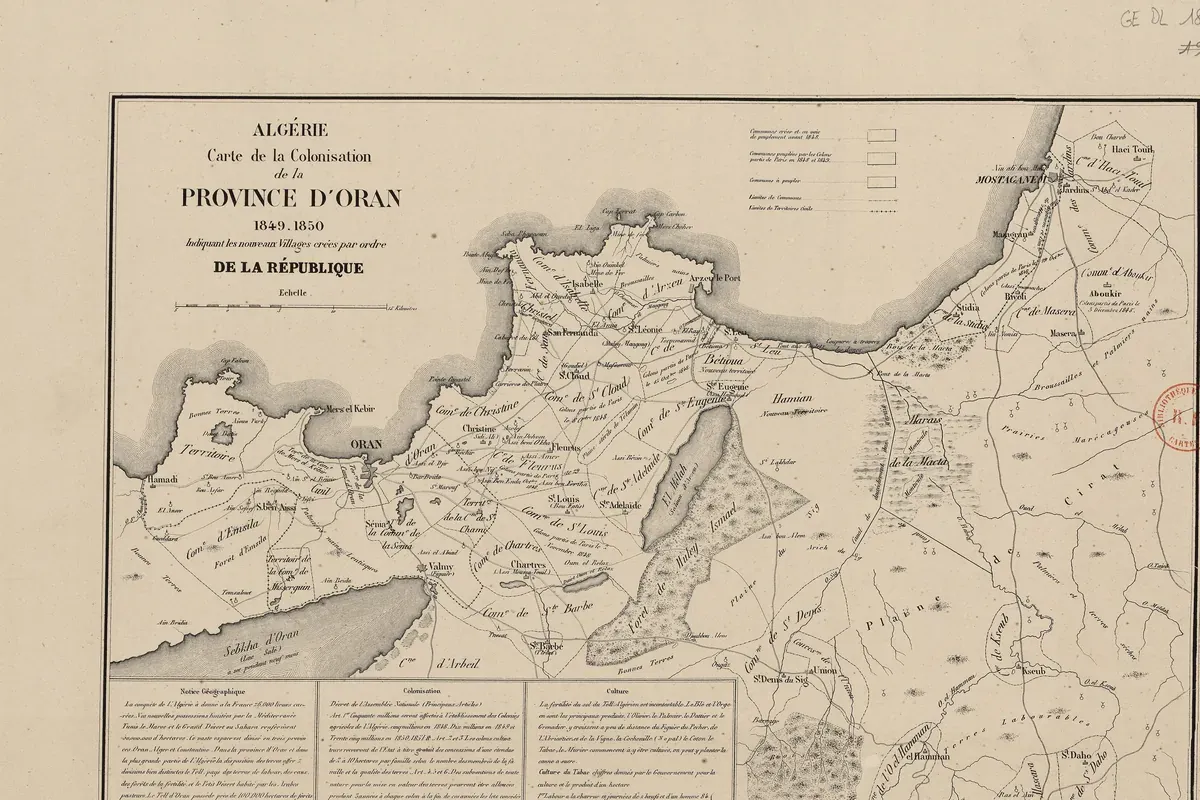
France invaded Algeria in 1830 and kept it for more than a century, ruling it as part of France itself. Land was the settlers' prize. From the 1840s the French state ran property-title operations that turned tribal, religious and village land into state land, and later laws passed more of it to European settlers.
Much of this was done by paperwork. Land that families had worked for generations had no French title, so it could be declared vacant and handed on. Historians agree that the process was systematic and framed in law, though the acreage involved is hard to pin down.
Resistance to French rule was met with force. On 8 May 1945, in Sétif, Guelma and Kherrata, marches for independence were put down by French troops and settler militias, and historians and the two governments still disagree about how many people died. France called it an "inexcusable tragedy" in 2005 and President Hollande named it in 2012. President Macron has ruled out an official apology.
- How it worked
- Take the land for export
- Who gained
- The French state; European settlers, who came to hold much of the best farmland; the colonial administration that held the title papers.
- What it left
- Algerian families dispossessed of land that settlers went on farming until independence in 1962, and a dispute about the record that France and Algeria still have not settled. France has acknowledged the 1945 killings but not apologised.
- Sources