
Asia · 1830–1870
Java's Cultivation System
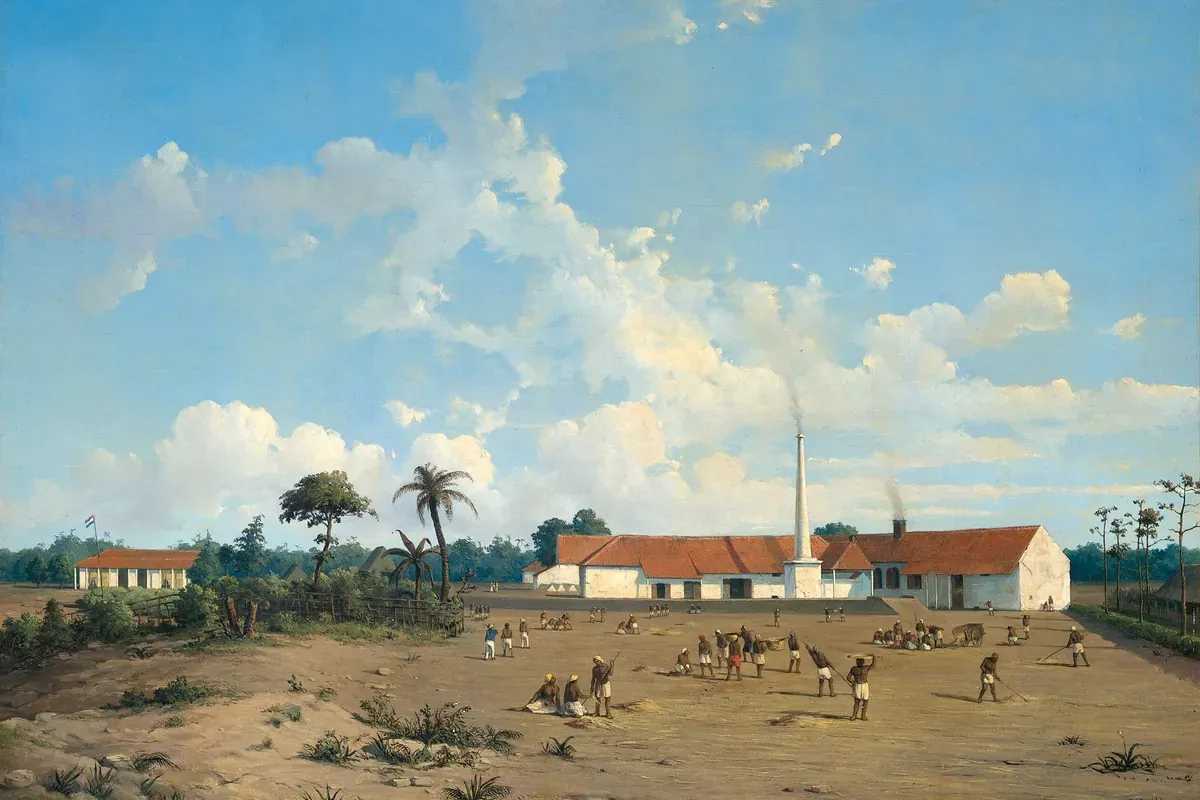
In 1830 the Dutch colonial government in Java brought in the Cultivation System. Villagers had to set aside a share of their land and labour to grow export crops for the government, among them coffee, sugar and indigo. The crops were shipped to the Netherlands and sold there.
The profits did two jobs. They balanced the budget of the Dutch East Indies and paid off debts left over from the old Dutch East India Company. A large share of the Dutch state's own budget came to depend on them. The Netherlands Trading Company, a state-backed firm, held a monopoly on the trade until 1872.
In effect the colonised paid the colonial state in labour and crops. In 1860 a Dutch former official writing as Multatuli exposed the system in his novel Max Havelaar, which Dutch readers took as a scandal.
- How it worked
- Make people work for nothing · Take the land for export · Make them pay for their own conquest
- Who gained
- The Dutch state; the Netherlands Trading Company (Nederlandsche Handel-Maatschappij); Amsterdam's port.
- What it left
- A Dutch treasury that came to lean on Javanese labour, and a novel, Max Havelaar, that made the system a public scandal in the Netherlands.
- Sources