Africa · 1885–1908
King Leopold's rubber
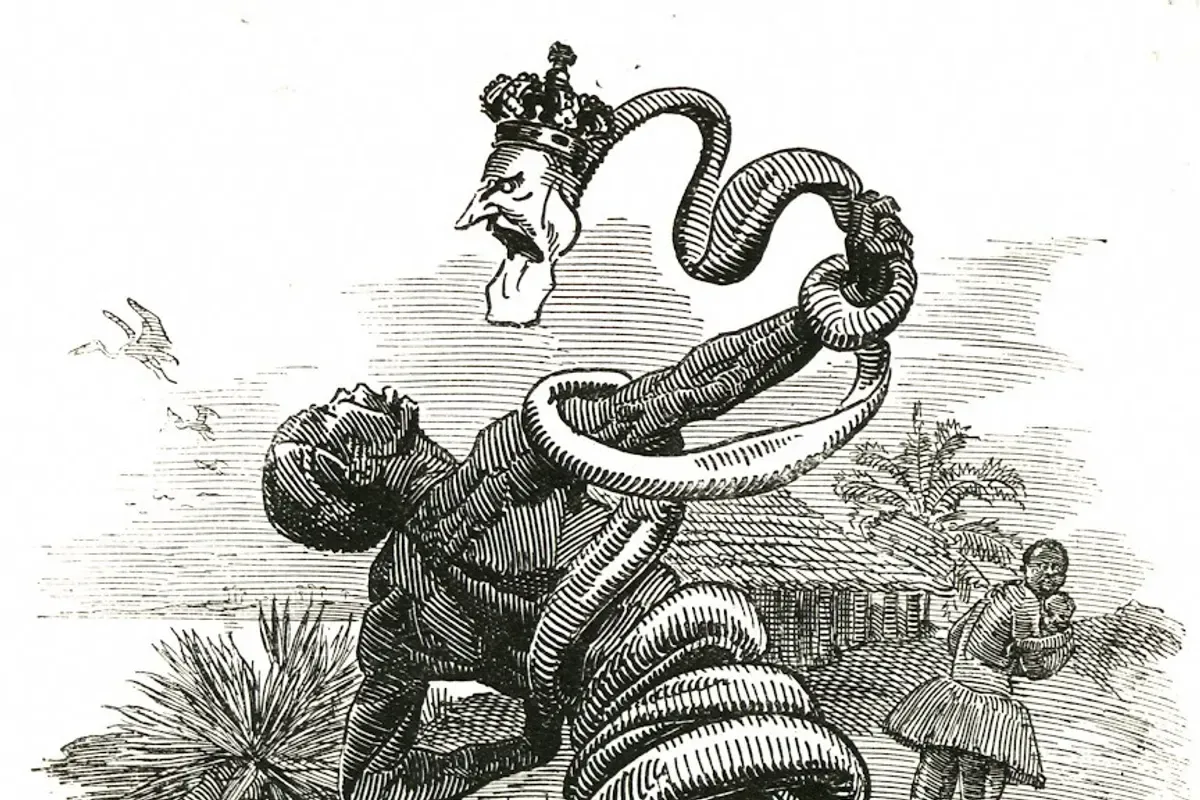
From 1885 the Congo Free State belonged to one man, King Leopold II of the Belgians, who ran it as a business. Europe and America wanted rubber for bicycle and car tyres, and Leopold's agents set villages quotas of wild rubber to collect from the forest.
Villages that fell short were punished. Soldiers of the Force Publique, Leopold's army, took hostages until the rubber came in, and had to account for every bullet they fired with a severed hand. In time the hands became a measure of the quota itself.
The profits went to Leopold and to concession companies such as the Anglo-Belgian India Rubber Company (ABIR), and the rubber was shipped out through Antwerp. Campaigners led by Edmund Morel and Roger Casement exposed the system, and in 1908 Belgium took the colony over from its king. In 2020 King Philippe expressed his "deepest regrets", stopping short of an apology.
- How it worked
- Make people work for nothing
- Who gained
- King Leopold II; concession companies such as the Anglo-Belgian India Rubber Company (ABIR); the port of Antwerp.
- What it left
- Campaigners documented the terror at the time. In 2020 Belgium's king expressed regret without apologising, and in 2022 Belgium returned a tooth of Patrice Lumumba, Congo's first prime minister, to his family.
- Sources