
Africa · 1945–today
The CFA franc, a currency kept in Paris
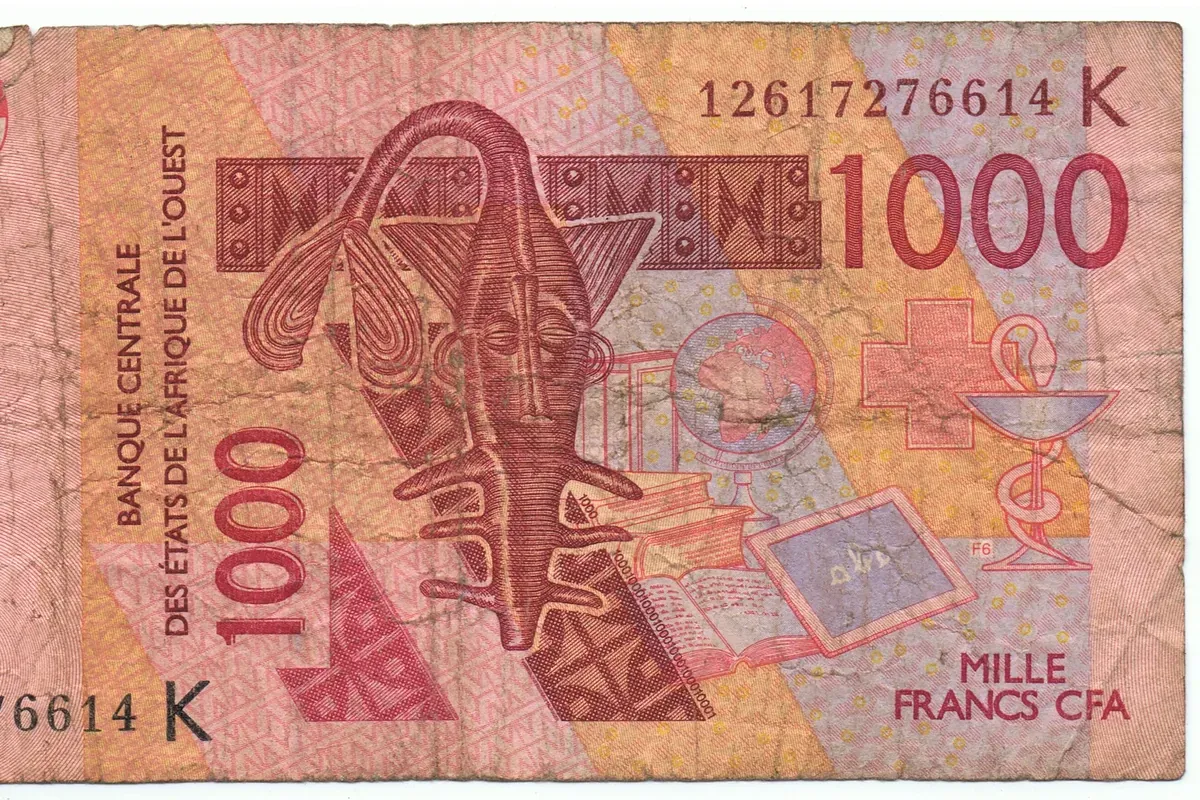

The CFA franc was created in 1945. It tied the money of fourteen African states, in West and Central Africa, to the French franc, and later to the euro. In exchange for a guaranteed exchange rate, their central banks had to deposit part of their foreign reserves in an account at the French Treasury.
Critics see monetary control that carried on after independence: the peg limited what the states could do with their own money. Defenders point to stable prices and a currency that could always be exchanged, and note that the central banks earned interest on their deposits. Economists still disagree about whether the arrangement has helped or hurt the states that use it.
Reforms between 2019 and 2021 ended the requirement for the West African states to deposit reserves in Paris, and the West African central bank closed its account there in 2021. The peg to the euro remains, backed by a French guarantee, and by 2024 further change had stalled.
- How it worked
- Keep the money and the law
- Who gained
- The French Treasury, which held the deposits; France, which kept a say over the monetary policy of fourteen states; the issuing central banks, which earned interest on their deposits.
- What it left
- A currency still pegged to the euro and guaranteed by France. The reserve rule has ended in West Africa, but its effects are still argued over.
- Sources