
Asia · 1838–1917
India's indentured workers
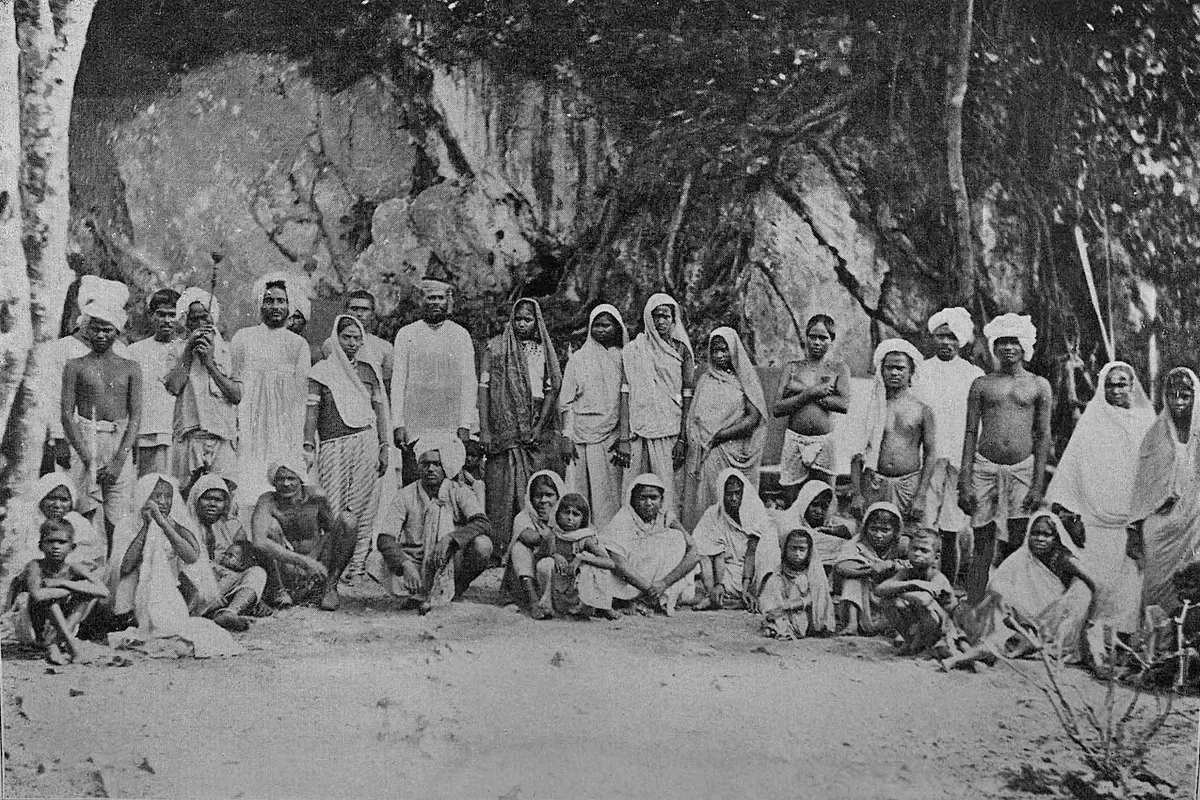
When Britain ended slavery in its colonies, the sugar planters still wanted labour that could not walk away. From the 1830s they found it in India. Men and women, many from rural districts hit hard by colonial rule, were signed up to work on plantations in Trinidad, Guyana, Mauritius, Fiji and Natal. Workers from China were shipped out too.
An indentured worker was bound to one estate for a fixed term of years, usually five, and leaving it before the term was up could mean a fine or prison. Many found the pay and conditions far worse than they had been promised.
The historian Hugh Tinker called it "a new system of slavery". Others, among them the novelist Amitav Ghosh, draw a line between the two while showing how one grew out of the other: the same plantations, needing the same kind of bound labour. The system ran until 1917.
- How it worked
- Make people work for nothing
- Who gained
- Sugar planters and the merchant houses behind them; the shipping lines that carried the workers; the colonial governments that ran the system.
- What it left
- Communities of Indian descent in Trinidad, Guyana, Mauritius, Fiji and South Africa, whose history ties India's story to the Caribbean plantation.
- Sources