Caribbean · 1833–2015
Britain buys out the slave-owners
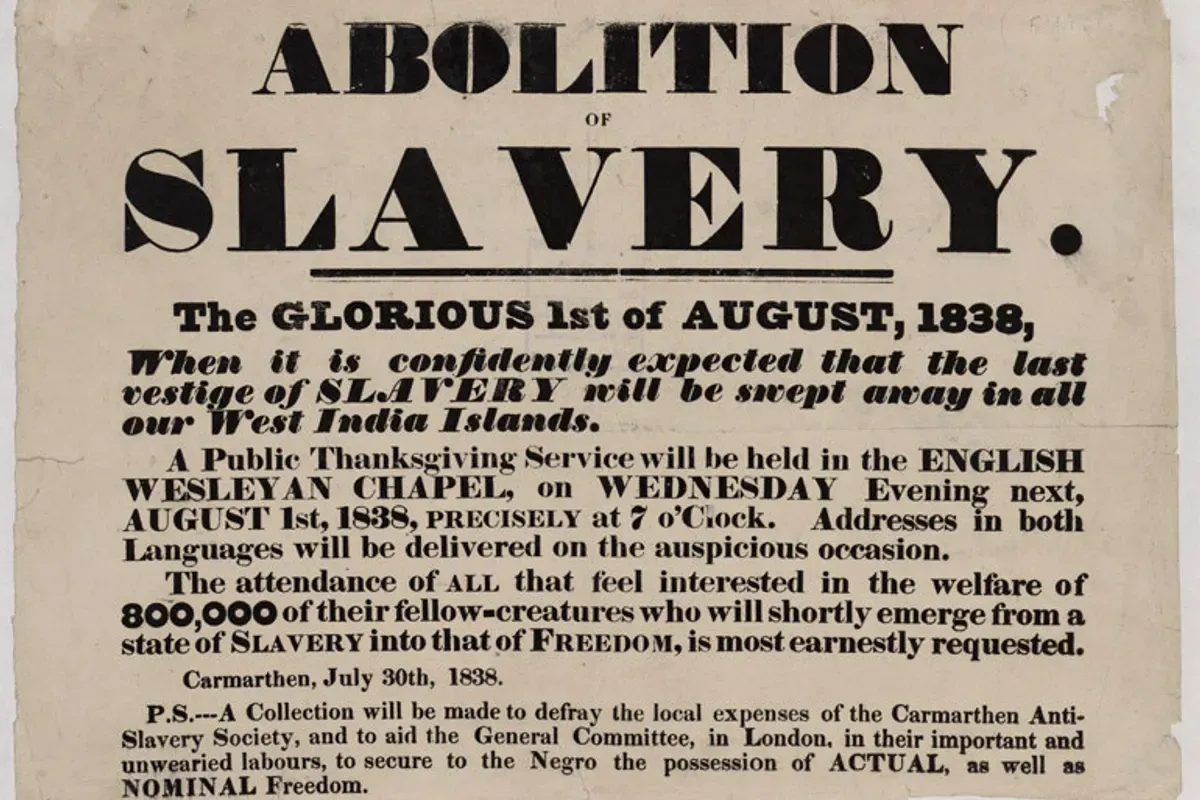
The Slavery Abolition Act of 1833 ended slavery in Britain's Caribbean colonies, and Parliament agreed to compensate the slave-owners for the people they would no longer own. The government raised the money by borrowing, a sum equal to about two-fifths of everything it spent in a year.
The people who had been enslaved received nothing. Most were made to go on working for their former owners, unpaid, as "apprentices", until 1838.
Every claim was recorded, and University College London has put the owners who were paid into a public database. Many of them lived in Britain, in London, Bristol, Glasgow and Liverpool and in country houses. The debt raised to pay them was carried in the national debt until 2015, so British taxpayers serviced it for generations, among them the descendants of enslaved people who later made their homes in Britain.
- How it worked
- Compensate the owners
- Who gained
- The slave-owners and their creditors, named claim by claim in UCL's Legacies of British Slavery database.
- What it left
- A debt carried in the national accounts until 2015, and a record of every owner who was paid, in which families, towns and firms can still find their names.
- Sources