
Britain and Ireland · 1845–1852
Food leaves a starving Ireland
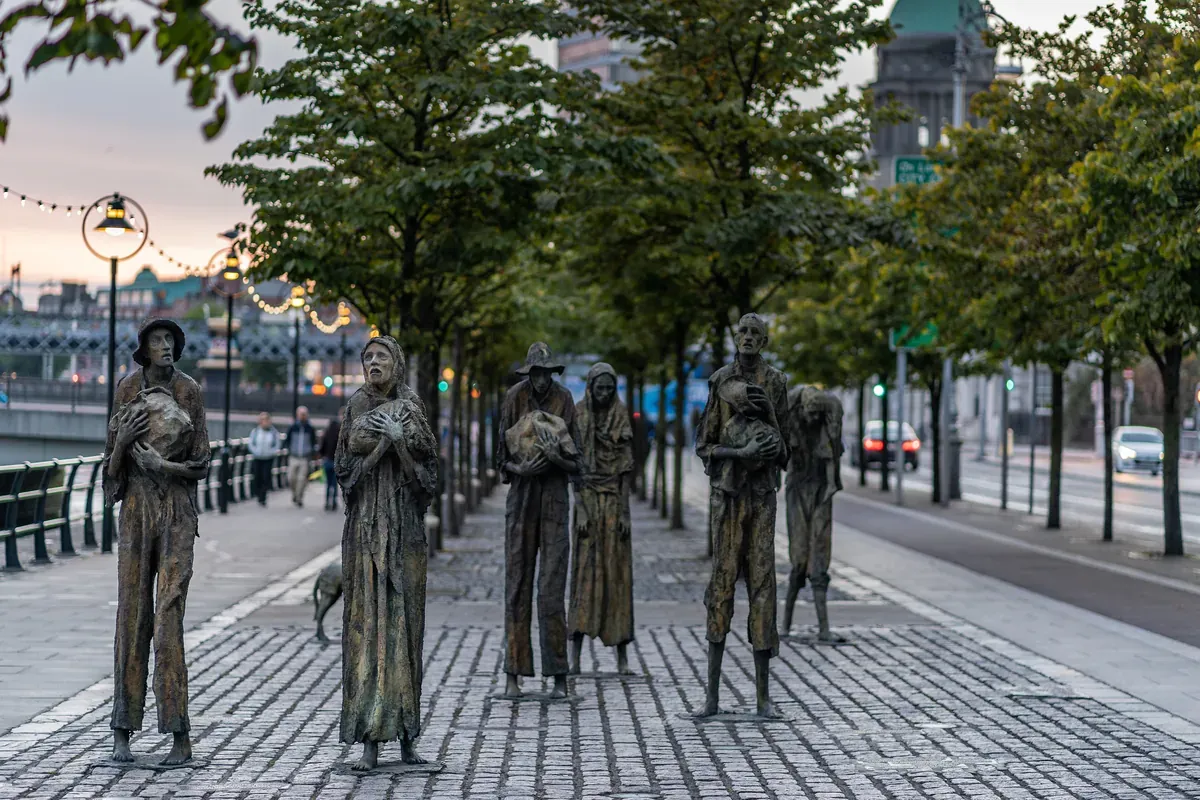

In 1845 a blight began to destroy the potato crop in Ireland, the food most of its labouring families lived on. Over the next seven years hunger and disease killed vast numbers of people and drove many more to emigrate.
All the while, other food kept leaving the country, mainly for Britain. UK Parliament's own account of the Great Famine confirms that large exports continued while people starved. Historians dispute how much of that food was surplus and how much could have fed the hungry, and official returns under-recorded what left.
Much of the land belonged to landlords, many of them living in Britain, whose rents still had to be paid. The British government left most relief to the market. Who chose to keep the food moving, and who was left to go hungry, is the question at the heart of the argument.
- How it worked
- Profit from disaster · Take the land for export
- Who gained
- Landlords whose rents kept coming, and the merchants who sold Irish food abroad.
- What it left
- A lasting argument over how far policy, as well as blight, caused the famine.
- Sources