
The Americas · 1570s–1800s
Potosí, the silver mountain
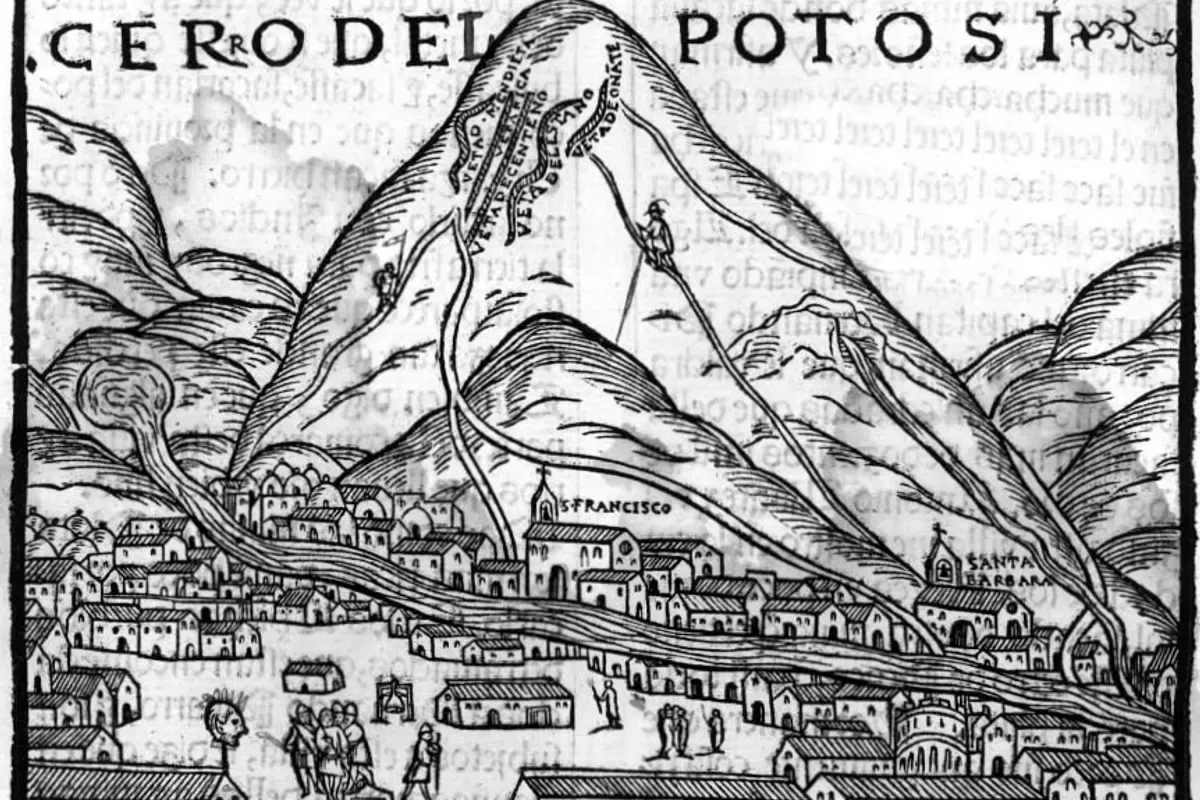
In the 1570s Francisco de Toledo, Spain's viceroy in Peru, took an Inca system of rotating labour, the mita, and turned it to mining. Indigenous communities across the Andes had to send men, in turns, to Cerro Rico, the mountain of silver above Potosí, in what is now Bolivia.
The silver was refined with mercury, and the mercury came from another mine worked by the draft, at Huancavelica in Peru. It supplied Potosí for almost three hundred years. Miners breathed rock dust and handled mercury, and many died of lung disease from the dust or of mercury poisoning. Whole families left their villages to escape the draft.
The silver paid the Spanish crown its share, and through the merchants of Seville it reached the bankers who lent to Spain's kings. Miners still dig inside Cerro Rico today, working for themselves in small cooperatives.
- How it worked
- Make people work for nothing
- Who gained
- The Spanish crown, which took a share of the silver; the merchants of Seville; the Genoese and German bankers who lent to Spain's kings.
- What it left
- Villages that lost their men to the draft, and a mountain that miners still dig into today.
- Sources